

Abstract
What would it feel like to hear the weather instead of seeing it? “Sonic Weather” is a sonification of real-time weather data that creates immersive auditory experiences, offering a new way to perceive daily weather patterns and enabling the visually impaired to discern weather fluctuations by listening to dynamic soundscapes.
Description
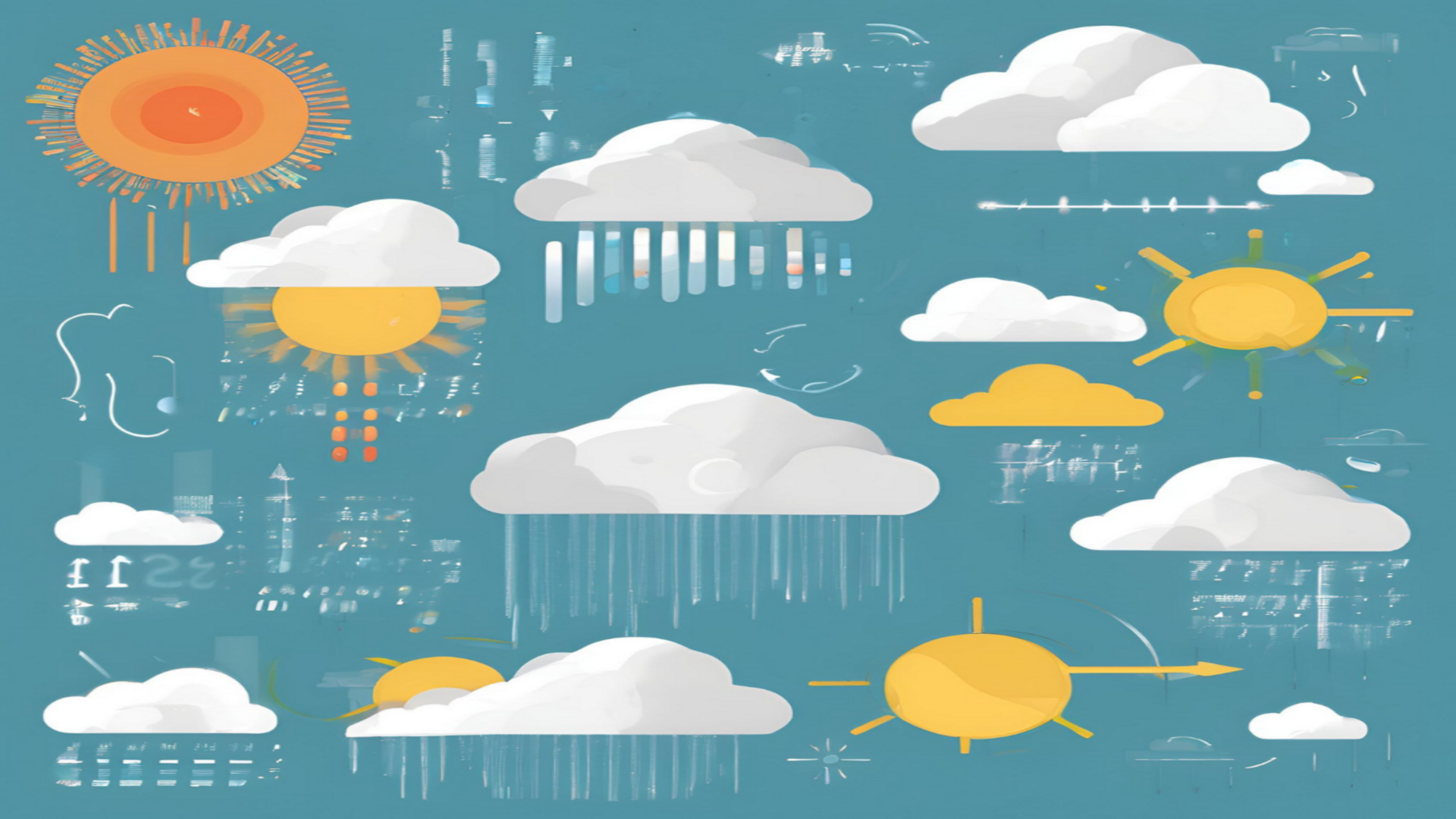
Imagine a world where you don’t just see the weather, you hear it! Sonic Weather transforms how we perceive weather, offering an alternative to traditional visual representations and data charts. By translating real-time weather data into dynamic auditory experiences, the project invites users to sense atmospheric conditions as evolving soundscapes.
The primary purpose of developing the “Sonic Weather” was to assist the visually impaired in understanding daily weather patterns audibly. Then, the scope expanded to offer an immersive auditory experience beneficial for everyone. Imagine individuals checking weather conditions while driving without having to look at their phones, potentially reducing the rate of car accidents.
The project highlights the mutual interactive correlation between weather conditions and the sonic identity of a place by establishing a connection between changes in weather patterns and the sonic responses of other components of the surrounding environment in a designated location. The sound design employed field recordings to provide a realistic sense of a particular place, integrating procedural audio designed for weather elements with recorded environmental soundscapes to convey what it was like to experience this weather in that location specifically. However, to adapt this concept to different locations, conducting field recordings to capture the specific environmental soundscape of each targeted place would be essential.
Based on fieldwork and data collection, the key weather elements for sonification were carefully selected to avoid overwhelming users with excessive sonic information. The project focused on core variables, such as time of the day, temperature, wind speed and direction, and precipitation, balancing clarity with immersive experience. Additionally, the design was built with flexibility in stereo and 5.1 surround formats to allow for immersive playback across different listening environments.
Overall, results demonstrated that weather patterns can be well interpreted through auditory representations. The provided audio samples represent daily weather conditions for the city of Edinburgh. Combining environmental soundscapes and biophonic sounds with procedural audio in the sonification designs proved to be successful in enriching the sonic piece, representing the sonic identity of the chosen location, and illustrating the mutual sonic interaction between weather conditions and other components of the environment.
ISA Entrant: Abeer Mohamed
Video


