
ISD Team
18 Mar 2026
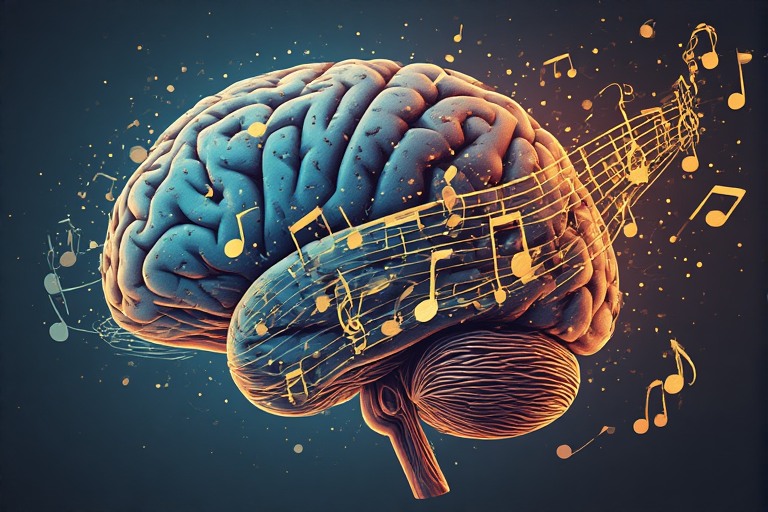
This paper, published in Neuroscience and Biobehavioral Reviews (2026), proposes music as a formal scientific metaphor for understanding the mind and brain, arguing it can guide theory-building and experimental design in cognitive neuroscience.
Key Facts
- Scientific metaphors go beyond simple analogies — they structure entire research programs by defining what should be measured, what counts as explanation, and what predictions are worth testing, as seen historically with the “mind as computer” metaphor.
- Unlike static metaphors (machines, computers, libraries), music emphasizes continuous adaptation, temporal richness, context-dependence, and cultural embeddedness, making it better suited to capture the dynamic nature of brain and cognition.
- The authors map core musical domains — structure, performance, improvisation, contextuality, polyphony, and noise — onto corresponding brain and cognitive dimensions such as predictive coding, neuroplasticity, multimodal integration, and neural disorders.
- Neural connectivity and synchronization are likened to an ensemble performance, where coordination, syncopation, and harmonic tension parallel how brain networks integrate and segregate information across multiple scales.
- Consciousness is compared to a co-composed symphony without a single conductor, where qualia resemble subjective “timbre” and conscious states reflect a dynamic balance of neural integration and functional differentiation.
- Emotional processing maps onto musical dynamics such as tension and release, with the brain continuously generating predictive models about affective content — much as a listener anticipates harmonic resolution.
- Brain development and plasticity are framed as iterative composition, with neural circuits shaped by experience over time, while improvisation serves as a metaphor for the brain’s capacity to reorganize after learning or injury.
- Brain disorders are conceptualized as distortions of dynamic repertoire — epilepsy as runaway neural avalanches, Parkinson’s as rigid over-synchrony, schizophrenia as “cognitive atonality,” and depression as loss of harmonic diversity.
- The authors propose a roadmap for translating this metaphor into practice, including music-inspired tools for neurotechnology and brain-computer interfaces, transdisciplinary research programs, and clinical music-based interventions — while acknowledging the framework does not replace mechanistic accounts and requires systematic empirical validation.
Latest magazine
Take a look at the latest magazine posts.